
Changemaker Spotlight – Natasha Urbano: Leading Support for Frontline Care Practitioners
“Unconditional positive regard, support without judgement, accountability without shame.”
When Natasha talks about leadership, she does not speak about titles, hierarchy or authority. She speaks about people, walking alongside them and doing the work well. She knows that when systems fail, it is children and young people who feel the impact most.
Leadership Grounded in People
In her role as Program Support Manager for Infinity Community Solutions Ltd. (ICS), Natasha works closely with residential care practitioners on the frontline of out of home care. Her focus is both simple and demanding. It is about ensuring the workforce has the knowledge, skills and self-awareness needed to deliver high quality care, while also being supported to sustain themselves in challenging roles.
Natasha’s approach to leadership has been shaped by lived experience. As a young person in care, and later as a young mum navigating pregnancy and parenting while completing high school, she experienced firsthand how systems operate and how deeply they shape lives. This experience guides how she leads today.
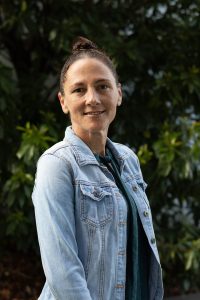
A First Nations woman from Yorta Yorta Country, Natasha is the third generation of women in her family to be removed. She describes the legacy of the Stolen Generations as complex and ongoing, often misunderstood as something belonging only to history. Her commitment to truth-telling about generational trauma and First Nations experiences brings a respected depth to her professional work.
Natasha has shared her story publicly on several occasions. She spoke at the 1999 Forde Inquiry and received the Premier’s Youth Upfront Award in 2003 for her advocacy on volatile substance misuse. While these platforms enabled her to raise awareness, they also exposed her to media narratives that at times misrepresented her experience. Even so, Natasha continues to speak with purpose about lived experience. She believes these stories are essential to shifting deficit narratives and highlighting what can work in out of home care.
What Natasha’s experience demonstrates is that what matters most for children and young people in out‑of‑home care is having someone in their corner who keeps showing up.
The Power of Consistency
In a rare interview for the ICS Changemaker series, Natasha reflects on the importance of continuity of care. She speaks of the workers who stayed and walked alongside her, offering what she describes as “unconditional positive regard, support without judgement, and accountability without shame.” That consistency, she says, made it possible for her to remain at school, complete Year 12, and feel believed in at a time when judgement was constant.
“Growing up in care for me was not about bad parenting,” Natasha explains. “It was about systems, and how people operate within them.”
Those experiences continue to inform her work today. In her role at ICS, Natasha emphasises continuity of care, non-judgement and reflective practice. She believes that caring well for others requires self-awareness, accountability and ongoing learning. It is not about perfection, but about being willing to reflect on how personal experiences, values and emotions shape professional practice.
Natasha holds high standards, not as a form of control, but as care. When practitioners are supported, grounded and reflective, they are better able to show up consistently. When care is consistent, children are safer.
Learning Through Story and Reflection
Teaching and advocacy have always been part of Natasha’s leadership, though rarely in traditional forms. She speaks often about the power of storytelling, not as self-expression, but as a tool for learning, understanding and change.
Alongside her frontline and training work, Natasha brings significant governance, academic and community leadership experience to the sector. She has served as a Board Member with both the CREATE Foundation and the Forde Foundation, contributing lived experience insight at a systemic level. She also holds a Graduate Certificate in First Peoples and Community Practice, reinforcing her commitment to culturally grounded, community-led approaches.
Over many years, Natasha has facilitated programs and community events, including initiatives such as the Inala Family Fun Day. These activities focus on building connection, advocacy and self-determination for children, young people and families.
“The more we understand someone’s story,” she says, “the more clearly we understand what drives them.”
Today, Natasha supports care practitioners through training, mentoring and professional development. She champions learning approaches that recognise people engage differently. Creativity, she believes, does not weaken accountability. It strengthens it.
While Natasha understands the importance of systemic reform, she believes meaningful change often begins closer to home. It happens in teams, relationships and everyday practice. Leadership, in her view, is found in how a practitioner shows up for a child on shift, and in the consistency of that care over time.
When asked what advice she offers care practitioners, Natasha speaks about reflection and self‑awareness as essential elements of the work.
“Everyone brings something into this work,” she says. “What matters is the willingness to notice how experience, emotion and intention influence practice, and to seek support, supervision and learning when needed.”
For Natasha, this ability to reflect is central to ethical practice. It supports clearer boundaries, more intentional care and stronger relationships with children and young people.
In many ways, Natasha’s leadership reflects the intersection of lived experience and professional practice. Through her work at ICS, she demonstrates that leadership is relational, and that consistent care grounded in self-awareness can create meaningful change for children and young people in out of home care.
Infinity Community Solutions Ltd is a boutique, secular social purpose organisation dedicated to making a meaningful difference in the lives of individuals. Through professional, evidence-based services, we empower people to reach their full potential and lead rich, fulfilling lives. Specialising in early intervention, out-of-home care, and National Disability Insurance Scheme (NDIS) participation, we are committed to delivering impactful, person-centred support that transforms lives and strengthens communities.